Herbal hair oil is often described as a shortcut to thicker, faster-growing hair. In reality, the best reason to use one is more grounded: it can turn a rushed wash-day routine into a consistent moment of care for your scalp and lengths. A well-chosen oil can help dry hair feel softer, improve the look of shine and make a scalp massage feel relaxing. Those are worthwhile benefits—and they do not need exaggerated promises to be useful.
What is herbal hair oil?
Herbal hair oil is a hair-care oil made with a base of plant oils, sometimes paired with botanical extracts or aromatic essential oils. The base may include oils such as coconut, jojoba, olive, argan or sunflower. Formulas vary greatly, so the label matters more than the product name. “Herbal” is not a regulated guarantee of purity, organic status or a particular result. It simply signals a botanical direction.
For a confident purchase, look for the complete ingredient list, directions for use and a sensible explanation of what the product is designed to do. A brand should be able to tell you whether the oil is intended for the scalp, the hair lengths, pre-wash use, overnight use or all of the above. If it makes dramatic medical claims, treat that as a reason to ask more questions rather than a reason to buy faster.
The most useful benefits of a consistent oiling ritual
1. It helps dry-looking hair feel more supple
Hair oils coat and lubricate the hair fibre, which can reduce the rough, parched feel that often appears after heat styling, weather exposure or frequent cleansing. When applied lightly to mid-lengths and ends, oil can make hair feel smoother and look more polished. It is especially helpful as a pre-wash step for people whose hair feels stripped after shampooing.
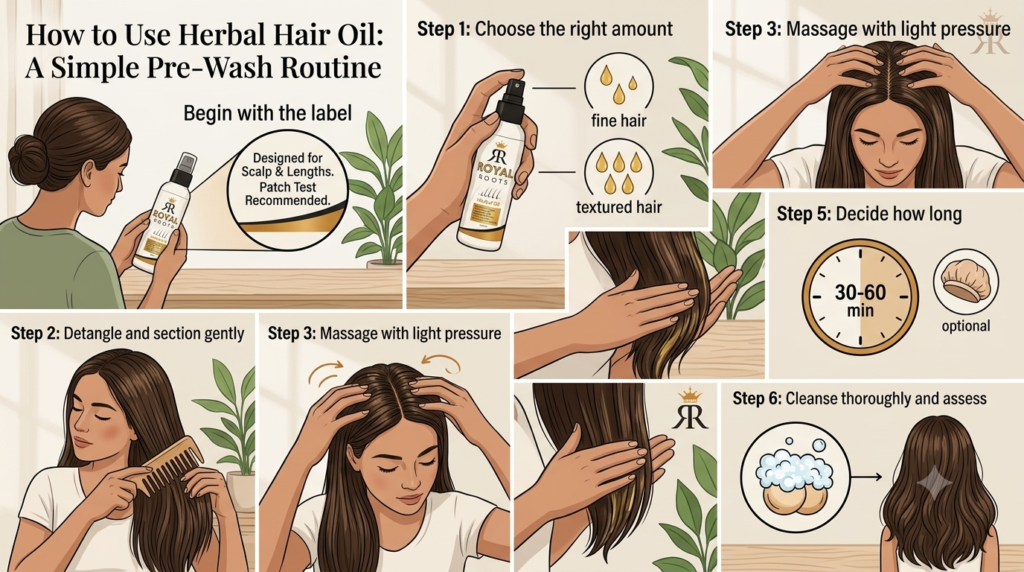
The goal is not to flood hair with product. Start with a small amount, distribute it carefully, and add only if your hair absorbs it comfortably. Fine or easily weighed-down hair may prefer a very light application, while thick, curly or textured hair may enjoy a more generous pre-wash treatment.
2. It makes scalp massage easier
Oiling provides slip, so fingertips can move across the scalp without tugging at hair. Gentle massage can feel deeply relaxing and gives you a reason to notice your scalp: is it dry, tender, flaky or irritated? That awareness is valuable. If discomfort, persistent flaking or noticeable shedding concerns you, a dermatologist or qualified clinician is the right person to consult.
Use the pads of your fingers—not nails—and small circular movements. Keep pressure comfortable. The ritual should never be painful or aggressive; vigorous rubbing can tangle hair and irritate sensitive skin.
3. It adds a healthy-looking shine
Oil reflects light on the surface of hair, creating visible gloss. This is one reason a small amount on the ends can make a hairstyle look more finished. Shine is cosmetic rather than a measure of hair health, but it can make your hair look cared for between washes.
For a lighter finish, emulsify one or two drops between palms before smoothing over the ends. Avoid applying a large amount near the roots if your scalp becomes oily quickly.
4. It supports a repeatable self-care habit
The strongest benefit of herbal hair oil may be consistency. A five-minute routine before wash day can encourage gentler detangling, a more mindful scalp check and less impulse to pile on styling products. Hair changes slowly, so a realistic routine that you enjoy is more valuable than a complicated schedule you abandon after a week.
How to use herbal hair oil before washing
- Detangle gently, beginning at the ends.
- Place a small amount of oil in your palms and warm it between your hands.
- Part the hair in sections and apply sparingly to the scalp if the product is scalp-safe.
- Massage with fingertip pads for three to five minutes.
- Smooth remaining oil through mid-lengths and ends.
- Leave on for 30 minutes to a few hours. Overnight use is optional, not required.
- Shampoo thoroughly. A second gentle cleanse may be helpful after a richer application.
Patch-test a new product first, especially when it contains essential oils or fragrance. Stop using it if you notice burning, itching, rash or other irritation. More product does not equal better results.
Choosing an herbal hair oil that suits you
Start with your goal. For dry, dull-looking lengths, choose a formula described as nourishing or pre-wash. For a minimal routine, choose one with simple directions and a full INCI list. If you have a sensitive scalp, avoid assuming that “natural” means non-irritating; fragrance and essential oils can still trigger reactions.
It also helps to check packaging and freshness guidance. An opaque or light-protective bottle can be useful for oils that are sensitive to light, while clear usage instructions make the product easier to use correctly. Finally, choose a texture you will actually enjoy. A formula that feels too heavy or smells unpleasant will not become a ritual.
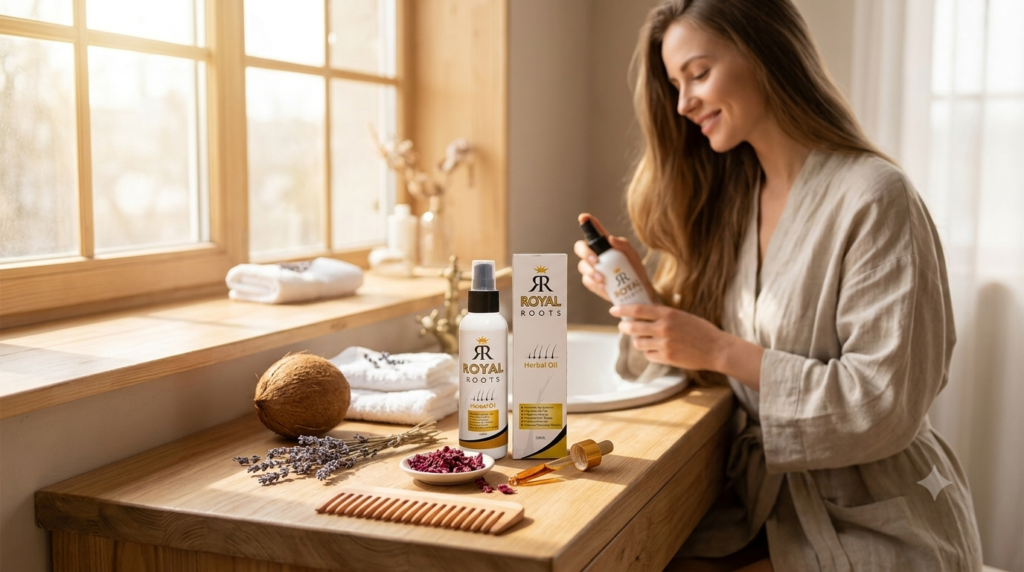
Royal Roots Herbal Hair Oil is designed as a botanical pre-wash moment for hair that needs softness, shine and care. Visit the product page for the final ingredient list and directions, and explore our hair-oiling routine guide before your first application.
The takeaway
Herbal hair oil works best when it is treated as one helpful part of hair care, not a miracle treatment. Use it to nourish the feel of dry lengths, create a relaxing scalp-massage ritual and add a polished-looking shine. Read the label, patch-test, apply lightly and stay consistent. That is a simple, sensible path to a hair routine that feels better.