Dry, frizzy hair is rarely solved by one miracle ingredient. It is usually a signal that the hair is dealing with moisture loss, friction, weather, heat styling, harsh cleansing or simply a routine that does not match its texture. Natural remedies can be helpful when they are part of a gentle, repeatable approach: nourish before washing, cleanse without overdoing it, condition well and reduce the daily stress placed on the hair fibre.
First, understand what frizz is telling you
Frizz is not a flaw. Hair can expand or look less smooth when humidity changes, when strands are dry or when the cuticle is disrupted by friction. Curly and coily textures are naturally more prone to visible frizz because their shape makes it harder for scalp oils to travel down the length of the strand. Colouring, heat and frequent shampooing can add to the effect.
The goal is not to force every strand into place. A better goal is hair that feels comfortable, retains softness and is easy to style in a way you enjoy. This makes it easier to choose products and habits that help rather than chase a perfectly smooth finish.
Use a botanical oil as a pre-wash treatment
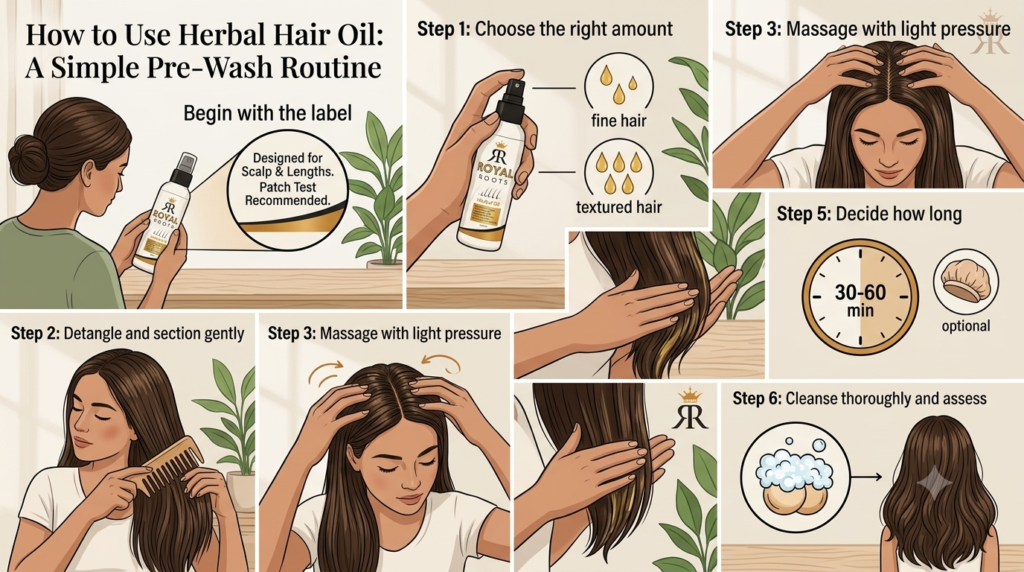
One of the simplest natural remedies for dry, frizzy hair is a pre-wash oil treatment. Applying a small amount of a suitable hair oil to lengths and ends before shampooing can add slip and help hair feel less stripped after cleansing. It also makes detangling gentler, which matters because rough brushing can create more breakage and frizz.
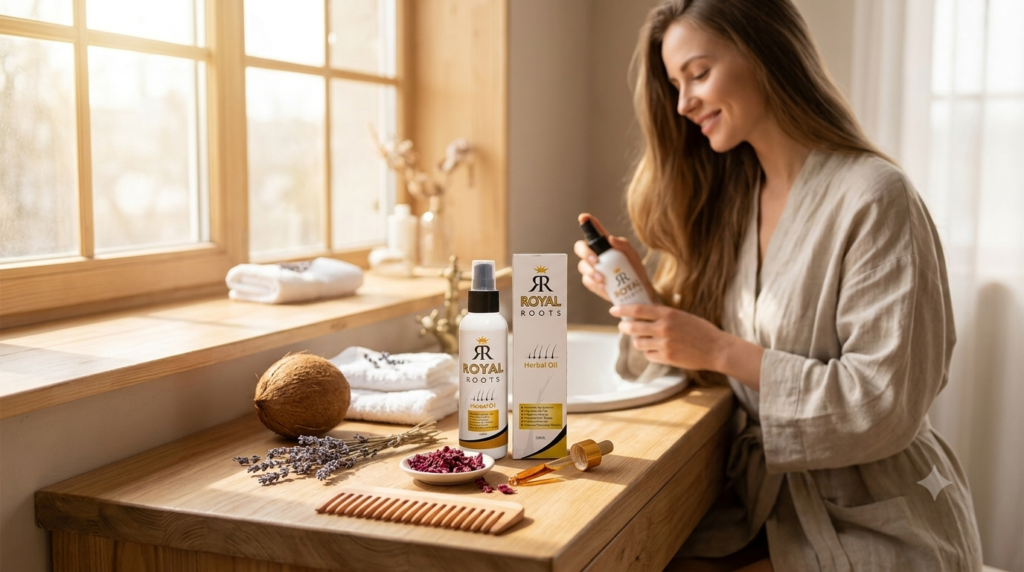
Start with Royal Roots Herbal Hair Oil or another formula with a complete ingredient list. Warm a little between your palms, smooth it through the ends and leave it on for 30 to 60 minutes before washing. If the formula is labelled for scalp use and your scalp is comfortable, massage a small amount along the parts as well. Shampoo thoroughly afterward.
There is no need to use huge amounts. Hair should feel lightly coated, not saturated. Fine hair may need only a few drops, while thick or tightly textured hair may benefit from section-by-section application.
Cleanse thoughtfully
Washing too often or using a cleanser that leaves hair squeaky can make dry lengths feel worse. On the other hand, avoiding cleansing for too long can create buildup that makes conditioning less effective. The best frequency is personal. Notice how your hair and scalp feel, then choose a schedule that leaves your scalp clean and your lengths manageable.
When you shampoo, focus on the scalp. Let the lather travel down the lengths rather than roughly scrubbing them. Use lukewarm water, not very hot water, which can feel drying. If you have used a generous amount of oil, shampoo twice gently rather than scrubbing once aggressively.
Condition with water, slip and patience
Conditioner is often the most important step for dry hair. Apply it to clean, wet lengths and give it time to work before rinsing. Use fingers or a wide-tooth comb to detangle while the hair has slip. Start at the ends, then move upward in small sections.
For textured hair, a weekly deep-conditioning session can be a calming way to reset the routine. Choose a formula that matches your needs and follow its directions. Natural does not have to mean homemade; a carefully formulated conditioner with clear ingredients can be more predictable than a kitchen mixture that is difficult to rinse out.
Reduce friction in small ways
Frizz often gets worse through ordinary friction: rough towels, cotton pillowcases, tight styles and constant touching. Switch from rubbing with a bath towel to gently squeezing water out with a soft microfiber towel or cotton T-shirt. Use a satin or silk-like bonnet, scarf or pillowcase if it helps your hair retain a smoother feel overnight.
Protective, low-tension styles can also reduce daily manipulation. The keyword is low tension. Styles that pull at the hairline or scalp can be uncomfortable and counterproductive. Your hair should never hurt to look neat.
Style with less heat and more protection
Frequent high heat can make dry, frizzy hair feel brittle. Whenever practical, lower the temperature, reduce passes with hot tools and use a heat protectant designed for your hair type. Air-drying, diffusing on lower heat or styling around your natural texture can be kinder to the lengths over time.
When hair is dry, finish with a tiny amount of oil on the ends for shine and to soften the appearance of flyaways. Remember: a little goes a long way. Add product gradually and stop when hair feels comfortable rather than greasy.
When natural care is not enough
At-home hair care cannot diagnose scalp conditions or explain sudden, dramatic changes in shedding, breakage or irritation. See a dermatologist or other qualified professional if you have pain, persistent itch, patches of hair loss, scaling, sores or a significant change that concerns you. Getting proper advice is an act of care, not a failure of your routine.
For everyday dryness and frizz, focus on gentle habits you can maintain: oil before washing, cleanse thoughtfully, condition patiently, reduce friction and style with less heat. Learn the basics in our how to use herbal hair oil guide, then browse the Royal Roots shop for your next wash-day ritual.