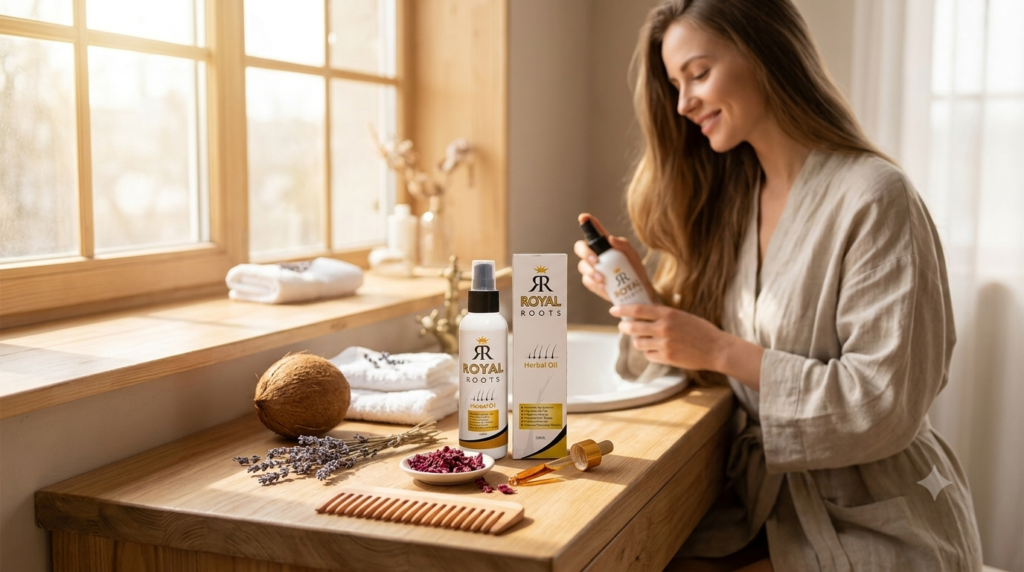
Knowing how to use herbal hair oil is more useful than owning a beautiful bottle and hoping for the best. The right technique is uncomplicated: apply a modest amount, use gentle massage, give the oil some time, then cleanse well. The details—how much, where to apply it and how long to leave it on—depend on your hair texture, scalp comfort and wash routine.
Begin with the label, not a trend
Before using any hair oil, read the label. Confirm whether it is designed for the scalp, the lengths or both. Check whether the brand recommends a patch test, how frequently to apply it and whether it should be washed out. A formula with essential oils, fragrance or active botanical extracts may not suit every scalp, even when the ingredient list looks natural.
Patch-test by applying a small amount as directed on a discreet area of skin and waiting according to the product guidance. Do not use the oil if you notice irritation. If you have a diagnosed scalp condition, persistent itch, pain or sudden hair changes, get individual advice from a qualified health professional before experimenting with new products.
Step 1: Choose the right amount
Start smaller than you think. For short or fine hair, a few drops to half a teaspoon may be enough. For long, dense, curly or coily hair, work section by section and add more only where needed. The aim is a light, even veil—not dripping roots or coated strands.
Using too much oil can make shampooing harder and leave hair feeling flat. It can also encourage scrubbing, which is exactly what a soothing hair-care ritual should avoid. A small amount applied consistently is usually easier to assess and adjust.
Step 2: Detangle and section gently
Gently detangle dry hair before applying oil. Begin at the ends and move upward using fingers or a wide-tooth comb suited to your texture. Then divide the hair into two to six sections. Parting makes it much easier to apply product deliberately, rather than pouring it on the crown and hoping it spreads.
If your goal is to care for the ends, focus there. If the product is suitable for scalp use, place a few drops along each part and use your fingertips to distribute it. Avoid nails and avoid pulling the hair taut.
Step 3: Massage with light pressure
Use the pads of your fingers in slow circles over the scalp for three to five minutes. This is not a test of strength. The massage should feel comfortable and calming. Move from hairline to crown, then toward the back of the head, pausing wherever the scalp feels tense.
Massage can be a useful ritual because it gives you a moment to check in with your scalp. If you see persistent flakes, sores, redness or tenderness, do not try to solve the problem by adding more oil. Pause the product and seek appropriate professional guidance.
Step 4: Apply through the lengths
After the scalp, smooth any remaining oil through mid-lengths and ends. These older parts of the hair are often exposed to friction, heat and weather, so they may appreciate a little extra slip. Press the oil into the hair with flat palms or gently rake it through with your fingers. For very dry-looking ends, add a second tiny amount only to those areas.
Hair that becomes oily at the roots may be happiest with oil applied only from ear level down. There is no rule requiring scalp oiling; build a routine around what your hair and skin tolerate well.
Step 5: Decide how long to leave it in
For a first try, leave the oil on for 30 to 60 minutes before shampooing. This is long enough to experience the ritual without committing to an overnight treatment. If you enjoy the result and your scalp feels comfortable, you can extend the time according to the product instructions.
Overnight oiling is optional. It can be messy, may transfer to bedding and is not automatically more effective. If you do leave an oil in overnight, protect your pillowcase and wash thoroughly the next morning. Skip it if you are prone to scalp irritation or buildup.
Step 6: Cleanse thoroughly and assess
Wet hair completely before shampooing. Apply shampoo to the scalp, massage gently, then rinse. A second shampoo may be appropriate after a rich oil application, especially for dense hair. Follow with conditioner on the lengths if that is part of your routine.
After drying, assess how the hair feels—not only how it looks in the first hour. Is it soft? Is the scalp comfortable? Does hair feel weighed down? These observations will tell you whether to use less oil, shorten the treatment time or focus the next application on the ends.
How often should you oil your hair?
Once or twice weekly is a sensible place to begin. People with very dry, textured hair may prefer more frequent pre-wash applications; people with fine hair or an oily scalp may prefer weekly or occasional use. Consistency matters more than frequency. Keep the routine easy enough to repeat for several weeks, then adjust based on comfort and manageability.
Common mistakes to avoid
Do not use an oil as a substitute for medical advice, apply it to broken skin, or assume a natural ingredient is automatically gentle. Avoid over-application, aggressive rubbing and very hot oil. Do not ignore irritation. Most importantly, do not judge a routine on a single dramatic claim online. A good product helps your hair feel and look cared for; it should not ask you to suspend common sense.
Use Royal Roots Herbal Hair Oil as directed on the label. For help choosing an amount or building a comfortable routine, read our guide to herbal hair oil benefits and contact the Royal Roots team.